Bachelor of Science (B.Sc) in Environmental Science and Impact Assessment (ESIA)
The Undergraduate Programme in Environmental Science and Impact Assessment (ESIA) is a multidisciplinary, future-oriented programme designed in alignment with the National Education Policy (NEP) 2020, and implemented from the Academic Year 2023–2024.
Overview
The Undergraduate Programme in Environmental Science and Impact Assessment (ESIA) is a multidisciplinary, future-oriented programme designed in alignment with the National Education Policy (NEP) 2020, and implemented from the Academic Year 2024–2025. The programme aims to equip students with a strong foundation in environmental science while developing applied competencies in impact assessment, sustainability, resource management, and environmental governance.
The curriculum integrates ecological sciences, climate change, environmental chemistry and physics, geospatial technologies, waste and water management, energy resources, and Environmental Impact Assessment (EIA) with biotechnology-based courses. This unique combination enables students to understand environmental problems from both scientific and technological perspectives, fostering holistic and systems-based thinking.
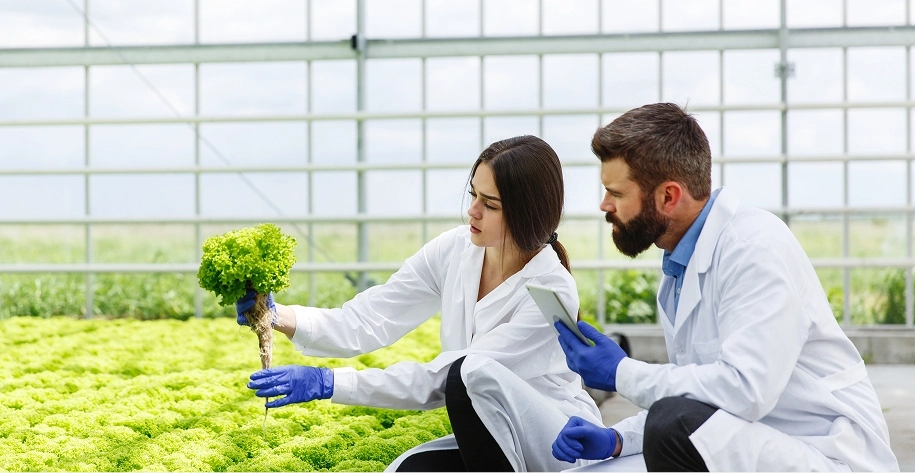
A key strength of the programme lies in its emphasis on experiential and field-based learning, supported through internships, skill enhancement courses, vocational training, and a minor project. Students are exposed to real-world environmental challenges through case studies, GIS and remote sensing applications, environmental evaluation exercises, and industry- or community-linked projects.
The programme also focuses on sustainability, ethics, policy awareness, and entrepreneurship, preparing graduates for diverse career pathways in environmental consulting, sustainability management, research, regulatory bodies, NGOs, industry, and higher education. By nurturing critical thinking, problem-solving skills, and environmental stewardship, the ESIA programme aims to develop competent professionals and responsible citizens capable of contributing meaningfully to sustainable development at local, national, and global levels.
- Program Specific Outcomes (PSO)
PO1: Environment and Biodiversity impact assessment and sustainable resource utilization
Graduates will demonstrate specialized skills in assessing environmental and biodiversity impacts and apply principles of sustainable resource utilization and conservation management across diverse ecosystems, integrating concepts from biotechnology, and natural sciences.
PO2: Industry Readiness and Technical Competence
Graduates will acquire hands-on expertise in environmental monitoring tools, biotechnological applications, Geographical Information System – Remote Sensing (GIS-RS), instrumentation, and data analytics, and bio-based solutions, for environmental monitoring, conservation, and sustainable management practices making them industry-ready professionals for environmental consultancy, compliance, and research-based roles.
PO3: Environment Innovation, entrepreneurship and Problem-Solving
Graduates will be able to design and implement innovative, biotechnology-driven, and nature-based solutions to address contemporary environmental challenges, and translate these into entrepreneurial opportunities for sustainable development.
PO4: Environmental policies, sustainability and societal engagement
Graduates will integrate scientific knowledge with environment policy frameworks, demonstrating the ability to contribute to environmental governance, advocacy, and community engagement in alignment with national priorities and the UN Sustainable Development Goals (SDGs).
Course Structure
Internship of 4 credits should be completed in Semester IV and V
| Discipline Specific Core Courses (DSC) (4 credits/course) | Minor/ Vocational (4 credits/course) | Multidisciplinary Course (MDC) (3 credits each) | Value Added Course (VAC) (2 credits each) | Ability Enhancement Course (AEC) (2 credits each) | Skill Enhancement Course (SEC) (3 credits/course) |
|---|---|---|---|---|---|
|
UG-ESIA-101: Ecology, Ecosystem and Biodiversity |
UG-BIO-101: Biomolecules |
|
UG-BIO-VAC1: Nutrition and Dietetics VAC2: Environmental studies |
|
UG-BIO-SEC1: Mushroom cultivation |
| Discipline Specific Core Courses (DSC) (4 credits/course) | Minor/ Vocational (4 credits/course) | Multidisciplinary Course (MDC) (3 credits each) | Value Added Course (VAC) (2 credits each) | Ability Enhancement Course (AEC) (2 credits each) | Skill Enhancement Course (SEC) (3 credits/course) |
|---|---|---|---|---|---|
|
UG-ESIA-102: Environment Issues, Perspectives and Policies |
UG-BIO-103: Basic Microbiology |
|
UG-BIO-VAC 2: Intellectual Property rights and patents |
|
UG-BIO-SEC2: Elementary tools for visualisation of biological data |
| Discipline Specific Core Courses (DSC) (4 credits/course) | Minor/ Vocational (4 credits/course) | Multidisciplinary Course (MDC) (3 credits each) | Value Added Course (VAC) (2 credits each) | Ability Enhancement Course (AEC) (2 credits each) | Skill Enhancement Course (SEC) (3 credits/course) |
|---|---|---|---|---|---|
|
UG-ESIA-201: Conservation Biology |
UG-BIO-201: Cell and Molecular Biology |
|
|
|
UG-BIO-SEC3: Biostatistics |
| Discipline Specific Core Courses (DSC) (4 credits/course) | Minor/ Vocational (4 credits/course) |
|---|---|
|
UG-ESIA-203: Climate change and Sustainability UG-ESIA-204: Geographical Information System and Remote Sensing UG-ESIA-205: Mineral Resources and Management UG-ESIA-206: Environmental Evaluation |
VOC 1: Bio-entrepreneurship |
- Faculty of Physical Science & Earth Science
Department of Environment Science & Impact Assessment
FAQ’s
What type of institution is Chowgule College?
The Department of English, Parvatibai Chowgule College of Arts and Science(Autonomous), began in 1962 as one of the first and oldest running department.
What type of institution is Chowgule College?
The Department of English, Parvatibai Chowgule College of Arts and Science(Autonomous), began in 1962 as one of the first and oldest running department.
What type of institution is Chowgule College?
The Department of English, Parvatibai Chowgule College of Arts and Science(Autonomous), began in 1962 as one of the first and oldest running department.
What type of institution is Chowgule College?
The Department of English, Parvatibai Chowgule College of Arts and Science(Autonomous), began in 1962 as one of the first and oldest running department.
What type of institution is Chowgule College?
The Department of English, Parvatibai Chowgule College of Arts and Science(Autonomous), began in 1962 as one of the first and oldest running department.
Career Opportunities
Graduates of the Undergraduate Programme in Environmental Science and Impact Assessment (ESIA) are equipped with interdisciplinary knowledge, practical skills, and professional competencies that enable them to pursue diverse career pathways across public, private, and non-governmental sectors. The integration of environmental science with impact assessment, sustainability, geospatial tools, and biotechnology enhances employability and adaptability in emerging green sectors.
Key career opportunities include and not limited to:
- Environmental Consultant / EIA Assistant;
- Sustainability and ESG Analyst
- Environmental Officer / Analyst/ scientists
- GIS and Remote Sensing Assistant
- Waste and Water Management Professional
- Climate Change and Sustainability Projects Associate
- Research Assistant / Project Fellow
- Environmental Educator / Outreach Coordinator
- Entrepreneur / Green Startup Professional
- Higher Education and Competitive Examinations