Bachelor of Science (B.Sc.) in Botany
The B.Sc. in Botany is a three-year undergraduate program designed to provide a strong foundation in plant sciences, integrating classical botanical knowledge with modern biological insights.
Overview
The B.Sc. in Botany is a three-year undergraduate program designed to provide a strong foundation in plant sciences, integrating classical botanical knowledge with modern biological insights. This program emphasizes critical understanding of plant structure, function, diversity, ecology, physiology, genetics, and evolution, preparing students for advanced studies and careers in research, education, agriculture, biotechnology, environmental conservation, and related industries.
Program Highlights
- Comprehensive Curriculum: Covers major areas of plant science including plant taxonomy, anatomy & morphology, physiology, ecology, genetics, plant pathology, and economic botany.
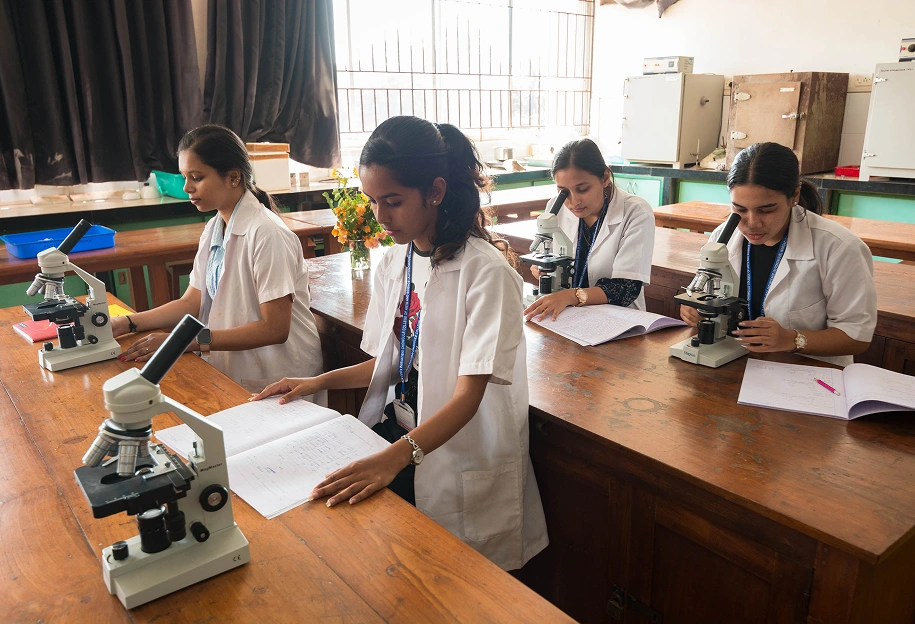
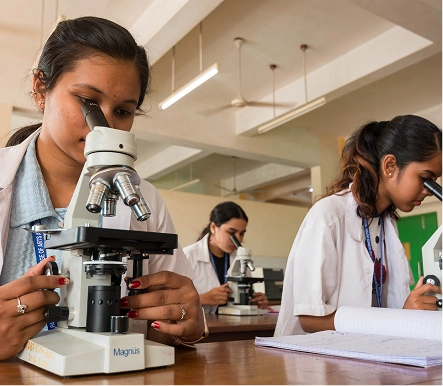
- Hands-on Learning: Extensive practical laboratory sessions, field excursions, herbarium work, and plant identification exercises enhance observational and analytical skills.
- Research Orientation: Encourages critical inquiry through project work, seminars, and research methodologies that build scientific communication and investigational competence.
- Interdisciplinary Exposure: Integrates modern techniques from molecular biology, biotechnology, and environmental science to reflect current trends in plant research.
- Program Specific Outcomes (PSO)
PSO-1: Equip students with foundational knowledge of Botany that enables them to explain, compare, classify, and analyse various plant groups, cellular structures, genetic and physiological processes, and their ecological interactions.
PSO-2: Develop students’ ability to apply theoretical knowledge through practical work, experiments, and research-based activities by utilizing basic techniques and instrumentation for botanical analysis.
PSO-3: Foster critical thinking, data analysis, and problem-solving skills to address challenges in botany and related ecological fields.
PSO-4:Prepare students to apply their knowledge in professional settings, contributing to various sectors of Botany, pursue higher education or careers in teaching, research, or entrepreneurial ventures.
PO1
PO2:
Develop students' ability to apply theoretical knowledge through practical work, experiments, and research-based activities by utilizing basic techniques and instrumentation for botanical analysis.
PO3: Foster critical thinking, data analysis, and problem-solving skills to address challenges in botany and related ecological fields.
Define, recognize and appreciate major literary forms as well as understand the nature, functions and schools of literary criticism and literary theory; appreciate the impact of the major texts and traditions of literature written in English in their social, cultural and historical context.
PO4: Prepare students to apply their knowledge in professional settings, contributing to various sectors of Botany, pursue higher education or careers in teaching, research, or entrepreneurial ventures.
Define, recognize and appreciate major literary forms as well as understand the nature, functions and schools of literary criticism and literary theory; appreciate the impact of the major texts and traditions of literature written in English in their social, cultural and historical context.
Course Structure
Internship of 4 credits should be completed in Semester IV and V
| Major I (4 credit course) | Minor/ Vocational (4 credit course) | Multidisciplinary Course (MDC) (3 credit course) | Skill Enhancement Course (SEC) (3 credit course) |
|---|---|---|---|
|
UG-BOT-101: Diversity of Lower forms (Microbes, Algae, Fungi) |
UG-BOT-101: Diversity of Lower forms (Microbes, Algae, Fungi) |
UG-BOT-MDC 1: Economic Botany |
UG-BOT-SEC 1: Basics in Horticulture |
| Major I (4 credit course) | Minor/ Vocational (4 credit course) | Multidisciplinary Course (MDC) (3 credit course) | Skill Enhancement Course (SEC) (3 credit course) |
|---|---|---|---|
|
UG-BOT-102: Diversity of Lower Plants (Bryophytes, Pteridophytes, Gymnosperm) |
UG-BOT-102: Diversity of Lower Plants (Bryophytes, Pteridophytes, Gymnosperm |
UG-BOT-102: Diversity of Lower Plants (Bryophytes, Pteridophytes, Gymnosperm |
UG-BOT-SEC 2: Algal Biotechnology |
| Major I (4 credit course) | Minor/ Vocational (4 credit course) | Multidisciplinary Course (MDC) (3 credit course) | Skill Enhancement Course (SEC) (3 credit course) |
|---|---|---|---|
|
UG-BOT-201: Cell Biology and Biomolecules UG-BOT-202: Systematics of Flowering Plants and Phylogeny |
UG-BOT-202: Systematics of Flowering Plants and Phylogeny |
UG-BOT-MDC 3: Basics in Horticulture |
UG-BOT-SEC 3: Basics in Microbiology |
| Major CoreMajor I (4 credit course) | Minor/ Vocational (4 credit course) |
|---|---|
|
UG-BOT-203: Plant Anatomy and Embryology UG-BOT-205: Plant Breeding and Biostatistics UG-BOT-204: Cytogenetics UG-BOT-206: Enzymes and Metabolic pathways |
UG-BOT-VOC 1: Herbal Cosmetology |
| Major CoreMajor I (4 credit course) | Minor/ Vocational (4 credit course) |
|---|---|
|
UG-BOT-301: Plant Physiology UG-BOT-302: Ecology and conservation UG-BOT-303: Techniques an Instrumentation |
UG-BOT-VOC 2: Plant pathology |
| Major CoreMajor I (4 credit course) | Minor/ Vocational (4 credit course) |
|---|---|
|
UG-BOT-304: Plant Genetic Engineering UG-BOT-306: Plant Tissue Culture UG-BOT-305: Plant Molecular Biology UG-BOT-PRJ: Project |
UG-BOT-VOC 3: Applied Mycology/ Plant propagation |
- Faculty of Life Science
Department of Botany
Established in 1962, the Department of Botany has grown into a distinguished centre for academic excellence and research, recognized for its doctoral programmes and contributions to scientific scholarship in Goa.
FAQ’s
What type of institution is Chowgule College?
The Department of English, Parvatibai Chowgule College of Arts and Science(Autonomous), began in 1962 as one of the first and oldest running department.
What type of institution is Chowgule College?
The Department of English, Parvatibai Chowgule College of Arts and Science(Autonomous), began in 1962 as one of the first and oldest running department.
What type of institution is Chowgule College?
The Department of English, Parvatibai Chowgule College of Arts and Science(Autonomous), began in 1962 as one of the first and oldest running department.
What type of institution is Chowgule College?
The Department of English, Parvatibai Chowgule College of Arts and Science(Autonomous), began in 1962 as one of the first and oldest running department.
What type of institution is Chowgule College?
The Department of English, Parvatibai Chowgule College of Arts and Science(Autonomous), began in 1962 as one of the first and oldest running department.
Career Opportunities
Graduates of B.Sc. Botany are well-equipped for diverse career pathways such as:
- Higher Education & Research
- Teaching and Academic Roles
- Agricultural and Horticultural Industries
- Plant Biotechnology and Pharmaceutical Sectors
- Environmental Consultancy and Conservation Projects, NGO’s
- Government and Private Sector Laboratories, Departments and Institutes
- Entrepreneurial opportunities