- FACULTY OF LANGUAGES & LITERATURE
Department of Konkani
Established in 1987, the Department of Konkani has been a dynamic centre for the academic advancement and cultural promotion of the Konkani language, fostering excellence through skill-based learning, research, and community engagement.
Overview
Established in 1987, the Department of Konkani has been a vibrant centre for the promotion and academic study of Konkani language and culture. The department introduced skill-based papers at the undergraduate level in Konkani Media, Translation, and Teaching Methodology, equipping students with practical and career-oriented competencies. With a remarkable record, the department reflects consistent academic excellence and dedicated mentoring.
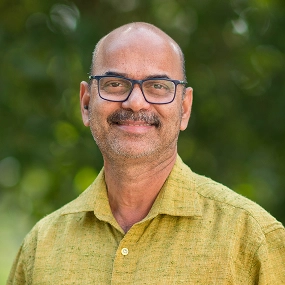
The Department of Konkani was first headed by the eminent educationist and noted writer Dr. S. S. Phadke, followed by Dr. Gunaji Sadanand Desai and Dr. Hanumant Chopdekar. Dr. Gunaji Sadanand Desai is presently the Head of the Department of Konkani at Parvatibai Chowgule College of Arts and Science. Over the years, the department has produced students who have excelled in their careers and have made significant contributions to the development of Konkani language, literature, culture, music, and allied fields.
Beyond academics, the department actively organizes literary and cultural activities aimed at the all-round development of students. The department also organises its annual event titled “Srujanotsav”, which provides a vibrant platform for students to express their talents, skills, and creativity. Under autonomy, the Department of Konkani offers unique courses that enable students to gain in-depth knowledge of the subject, thereby preparing them to qualify for various competitive examinations. The department also places strong emphasis on developing research skills among students, encouraging scholarly inquiry and critical thinking.
As part of its Community Outreach Programme, the department has conducted street plays in various schools to create awareness on important social issues such as garbage management, the girl child, elections, corruption, and issues concerning environment. The department maintains close associations with the Directorate of Official Language, Government of Goa, Goa Konkani Academy, and Konkani Bhasha Mandal, thereby strengthening its academic and cultural outreach. The department also publishes its own newsletter, “Piki Piki Kajule”, which serves as a platform for creative expression and scholarly engagement in Konkani.
Vision
Konkani being a relatively young Indian language, the Department of Konkani of this College understand the need to work towards providing insights of Origin of Language, Cultural Identity, Literary development and Folklore of Konkani Language to create Konkani scholars with local and global prospective. For this, department offers courses in History of Konkani Language and Literature, History of Konkani Language Movement, Study of Konkani Folklore, Critical Study of Konkani Dialects and modern trends in the Konkani Literature. So we in Konkani department would like to focus on the Socio-Literary, Socio-cultural and Socio-Historical study of Konkani Language. The faculty from the department holding PhD is specialized in the field of Shenoi Goembab (Father of Konkani Language) and Linguistic Identity of Konkani.
A weeklong activity like “Srujanotsav” is one of the major program organized by department wherein students are encouraged in creative writing. Sahitya Academy Award winner Konkani writers such as Pundalik Naik, Damodar Mauzo, Melvin Rodrigues, Dr. Jayanti Naik, Dr. Madhavi Sardesai, Dr. Narayan Desai etc were invited under such activities. We provide training and guidance to our students in street plays, one act plays, folk dance, folk songs etc. We organize Workshops as well as study tour to learn the socio-cultural aspects of the Konkani community across the country. Internship programs in Teaching, Media and research writing are also an integral part of our curriculum. On successful completion of the said course, students will be able to achieve basic skills to work as Teacher, Editor, News Reader, Radio and TV Anchor, Proof readers, Critiques etc. They can also specialize further in fields related to Konkani Language & Literature. They can also join the field of creative writing and research.
Mission
Students who have completed their HSSCE in any stream, well-verse in Konkani and interested in the study of Konkani Language and Literature are eligible to take this course. The students interested in pursuing graduation in Konkani should have passed HSSCE (10+2) with Konkani as a subject. The student should be confident in expression, verbal or literary through presentation or through assignments. We impress on participation of students in all academic activities.
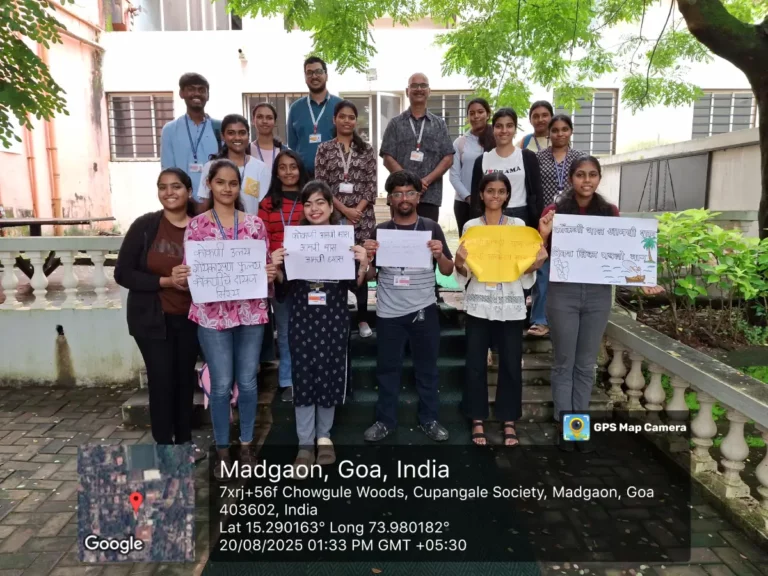
Activities Organised
- Srujanotsav
- Field Visit to Kerala
- Meeting the Author
- Seminars/ Conferences conducted
Teaching & Learning method
- Experiential Learning
Students learn through direct experiences such as field visits, interviews with writers, participation in cultural festivals, and community-based activities, enabling practical understanding of language and culture. - Project-Based Learning
Learners undertake individual or group projects on topics like Konkani literature, folklore, media, or translation, fostering research aptitude, collaboration, and independent learning. - Activity-Based Learning
Classroom activities like debates, role plays, storytelling, recitation, street plays, and dramatization are used to strengthen language proficiency and student engagement. - ICT-Enabled Teaching
Use of audio-visual aids, documentaries, online archives, digital dictionaries, and language tools to make learning more interactive and technology-driven. - Peer Learning
Students learn collaboratively through group discussions, peer presentations, and mutual feedback, encouraging confidence, communication skills, and collective knowledge-building. - Translation and Media Practice
Hands-on translation exercises and exposure to Konkani media (newspapers, radio, digital platforms) help students develop professional skills and real-world language application. - Research-Oriented Learning
Students are introduced to basic research methodologies, paper presentations, literature reviews, and documentation, nurturing critical thinking and scholarly writing skills. - Community-Based Learning
Learning is extended beyond the classroom through outreach programmes like street plays and awareness campaigns, linking academics with social responsibility. - Creative Learning Approach
Encouraging students to write poems, short stories, scripts, and songs in Konkani to develop creativity and appreciation for literary expression. - Interactive Classroom Method
The interactive classroom method is adopted to actively engage students in the learning of Konkani language and literature through text-based discussions, interpretation of poems and prose, oral reading, debates, storytelling, and question–answer sessions in Konkani. Students are encouraged to share their views on literary works, analyse themes, characters, and cultural contexts, and participate in language-based activities.
Best Practices
- Promotion of Konkani Language and Culture
The department actively promotes Konkani language, literature, and culture through academic programs, literary events, cultural activities, and participation in Konkani festivals and seminars. - Consistent Academic Excellence
Maintaining very good results at the T.Y.B.A. level for several years reflects effective teaching practices, continuous assessment, and personalized academic mentoring. - Skill-Based and Career-Oriented Curriculum
The department offers skill-based papers such as Konkani Media, Translation, and Teaching Methodology, enhancing students employability and professional competence. - Annual Festival of Creativity– ‘Srujanotsav’
The department organizes Srujanotsav every year, providing a platform for students to showcase their literary, cultural, and creative talents in Konkani. - Community Outreach through Street Plays
Students participate in street plays conducted in schools and public spaces to spread awareness on social issues, in collaboration with NGO Butukak Memorial Trust under their initiative Chalo School Mega Drive, thereby linking Konkani studies with social responsibility. - Interactive and Innovative Teaching Methods
The department adopts interactive classrooms, activity-based learning, ICT-enabled teaching, and experiential learning to make the study of Konkani language and literature engaging and effective. - Research and Writing Orientation
Students are encouraged to develop research skills through projects, paper presentations, literary analysis, and participation in seminars and workshops. - Strong Institutional and Cultural Linkages
The department maintains close association with the Directorate of Official Language, Government of Goa, Goa Konkani Academy, Konkani Bhasha Mandal and Butukak Memorial Trust (BMTGoa) for academic and cultural enrichment. - Student Publications and Newsletter
The department publishes its own newsletter “Piki Piki Kajule”, encouraging creative writing, critical thinking, and literary expression among students. - Mentoring and Holistic Student Development
Faculty members provide academic guidance, career counselling, and motivation, focusing on the overall personality development of students.