
Philosophy
Department of Philosophy
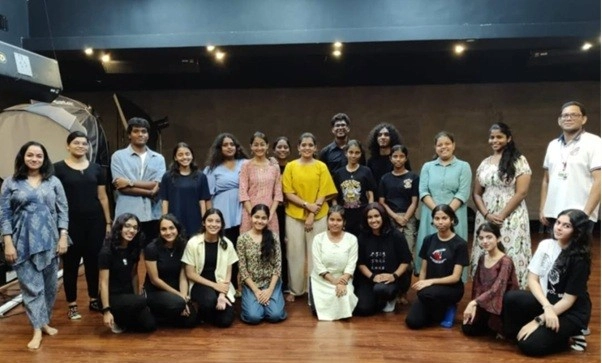
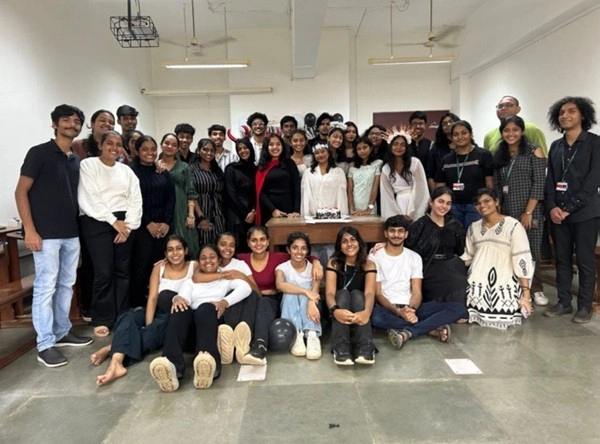
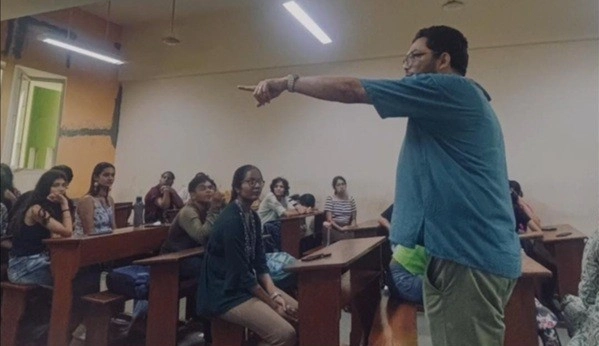
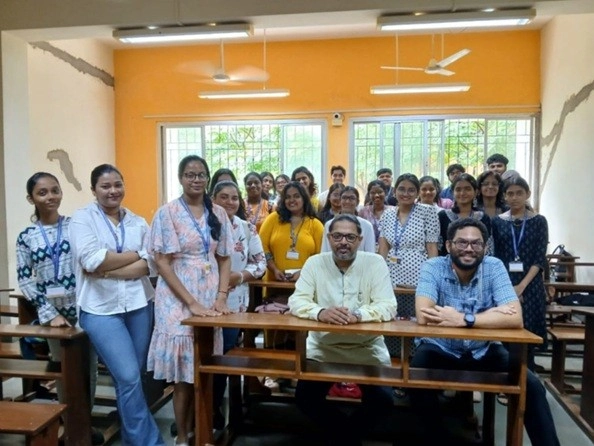
FACULTY OF SOCIAL SCIENCE Department of Philosophy Established in 1962, Department of Philosophy nurtures critical thinking and holistic development through the study of Indian and Western philosophy, fostering confidence, leadership, and ethical understanding. Overview Established in 1962, the Department of Philosophy is one of the foundational pillars of Parvatibai Chowgule College. The department offers a comprehensive B.A. program designed to introduce students to the profound traditions of both Indian and Western Philosophy. Its mission is to encourage students to examine and reflect upon their understanding of the world, translating theoretical teachings into personal experience through constant reflection and ethical action. Operating under an Outcome-Based Education (OBE) framework, the department balances historical philosophical rigor with modern relevance, fostering a learner-centric environment where critical thinking and social responsibility are paramount. Vision To examine and reflect upon our understanding of the world and our place within it through the study of Philosophy, and translate its teachings into personal experience, through constant reflection and action. Mission To foster a rigorous intellectual environment where students master the diverse traditions of Indian and Western thought, equipping them with the analytical tools to deconstruct complex global issues, to bridge the gap between abstract theory and ethical practice, and to lead lives of purposeful action, social responsibility, and continuous self-reflection. Programmes Offered Bachelor of Arts (B.A) in Philosophy UNDERGRADUATE PROGRAM | 3 YEARS Bachelor of Arts (B.A) in Philosophy The Undergraduate Programme… Read More No posts found Department Faculty Saroj Atmaram Usgaonkar Assistant Professor Dr. Audrick Agnelo Augusto D’Mello Assistant Professor Soofiya Yusuf Mulla Assistant Professor Mansi Manohar Dhargalkar Assistant Professor No posts found Activities Organised Philosophy major Mellysun Reevs winning the Gold Medal at the Inter-Collegiate Power Lifting Championship 2026 organised by Goa University Theatre workshop by actor and NID alum, Daksha Shirodkar as part of the Skill Enhancement Course (SEC), Philosophy and Theatre, 2024-25 Philosophy Day 2024-25 “We Listen and We Don’t Judge” Series to discuss relevant philosophical topics. Here, we talk about GenZ breaking the trauma chain, 2025-26 Talk by Savio Rodrigues on “Fear of Loss, Hope to Gain”, 2025-26. Teaching and Learning Method The department has pioneered a shift from traditional “passive” lecturing to active, ICT-enabled learning. The methodology is designed to cater to diverse learning styles (visual, auditory, and kinesthetic). Flipped Classroom & Blended Learning: Students engage with core materials (readings, videos) via Google Classroom or Moodle before class, allowing face-to-face sessions to be dedicated to high-level debate and analysis. The “Gobbet” Method: A specialized technique where students are presented with a passage of literature, an image, or an artifact to provide a context for deep philosophical analysis and discussion. Role-Play & Simulations: Students often enact philosophical dialogues (e.g., Socratic circles) or “role-play” as historical philosophers to better grasp complex ethical and metaphysical arguments. Problem-Based Learning (PBL): Students work in groups to solve open-ended ethical dilemmas, applying theoretical frameworks like Utilitarianism or Deontology to real-world scenarios. Best Practices The department is recognized for practices that bridge the gap between abstract thought and community application: Internal Academic Audit: A rigorous self-reflection process where external experts and alumni evaluate the curriculum and teaching quality to ensure it meets global standards. Compulsory Internships: Under the college’s autonomous structure, Philosophy students complete 120 hours of internship, often in NGOs, educational institutes, or legal firms, to develop professional ethics and “soft skills.” World Philosophy Day Celebrations: An annual flagship event involving inter-collegiate debates, guest lectures from international scholars, and “Philosophical Skits” to popularize the subject among the youth. Notable Department Alumni Philosophy graduates from Chowgule College have successfully transitioned into academia, law, civil services, and social entrepreneurship. Name Role / Achievement Sanket Revankar (2020) Distinguished Alumnus and member of the Board of Studies in Philosophy, contributing to curriculum design, cleared NET-JRF and pursuing PhD full time at Goa University. Terrance D’Souza (2024) Currently pursuing Masters in Social Work from St. Joseph’s, Bangalore. Mahima Shirodkar (2024) Currently pursuing Masters at Goa University and looking to complete BEd after that and become a teacher. Alina Kollanur (2024) Currently pursuing Masters in English at PCCAS Mizia Moreira (2024) Flight attendant with Indigo Daniel Thomas (2025) Currently pursuing LLB at National Law University, Odisha Legal Professionals A significant number of alumni have pursued LL.B. at prestigious institutions like V.M. Salgaocar College of Law, specializing in Human Rights and Constitutional Law. Civil Servants and Social Work Several alumni have successfully cleared GPSC/UPSC examinations, attributing their analytical and writing skills to their philosophical training as well as working with non-profits. Academia and Research Alumni also opt to be part of academia and research either in Philosophy and other disciplines through graduate and doctorate programmes or complete their BEd and teach in schools.
Bachelor of Arts (B.A) in Philosophy
UNDERGRADUATE PROGRAM | 3 YEARS Bachelor of Arts (B.A) in Philosophy The Undergraduate Programme in Philosophy is a multidisciplinary, future-oriented programme designed in alignment with the National Education Policy (NEP) 2020, and implemented from the Academic Year 2024–2025. Apply Now View Syllabus Overview The BA Philosophy programme at Parvatibai Chowgule College of Arts and Science, Autonomous is running since 1962. It is an attempt to introduce a new subject to the students which is relevant in the time as well as challenging. The programme offers an insight to Indian and Western Philosophy. We offer various opportunities for students to build their confidence and their overall development. An outcome based educational system is followed by developing course plans and objectives. The Department focuses on equality of all students. There are various activities taking place in the Departments which helps in developing team work and leadership qualities among students. The Department through its teaching pedagogies helps in improving the knowledge of students and also building confidence. Program Specific Outcomes (PSO) PSO-1: Critical Thinking, Analysis, Knowledge Enhancement Graduates will demonstrate advanced critical thinking skills by logically analysing philosophical texts and arguments. They will develop the ability to evaluate diverse perspectives, identifying assumptions, biases, and logical fallacies. Graduates will acquire a comprehensive understanding of major philosophical traditions, including Western, Eastern, especially Indian, and contemporary schools of thought. They will demonstrate knowledge of key philosophical figures, texts, and movements, thereby fostering a well-rounded philosophical foundation. PSO-2: Interdisciplinary Integration and Lifelong Adaptability Graduates will showcase a profound capacity to integrate philosophical knowledge and methodologies from diverse disciplines. This will enable them to gain a holistic understanding of intricate issues, and devise solutions across varied fields of study. Graduates will successfully navigate between philosophy and other disciplines, fostering a comprehensive and interconnected approach to intellectual analysis. They will also embody flexibility, adaptability and empathy in their academic, personal, and professional endeavours. They will embrace change readily, continually learn and apply the acquired skills within the ever-evolving world and thrive in diverse and unpredictable environments. PSO-3: Ethical Citizenship and Social Accountability Graduates will exhibit a profound ethical awareness and sense of social accountability, locally and globally. They will be able to engage in ethical decision-making and social responsibility, reflecting a deep understanding of philosophical thinking on contemporary societal challenges. Graduates will also showcase sensitivity to intercultural competence, environmental changes, and foster a sense of empathy, respect, and meaningful engagement with communities, thereby contributing to positive societal change. Graduates will not only be critical thinkers but also be ethical and socially responsible citizens in an ever-evolving world. PSO-4: Holistic Skill Development Graduates will demonstrate comprehensive skill development that prepares them for success in diverse fields, including management, law, and psychology. They will acquire skills essential for professional excellence and personal growth. They will be able to be critical thinkers and problem solvers, effective communicators, and ethical decision makers. Graduates will also exhibit an interdisciplinary understanding along with resilience and adaptability in their respective professional fields. They will be prepared to excel in diverse career paths, emerging as well-rounded individuals equipped for professional success and lifelong learning. Graduates will demonstrate advanced critical thinking skills by logically analysing philosophical texts and arguments. They will develop the ability to evaluate diverse perspectives, identifying assumptions, biases, and logical fallacies. Graduates will acquire a comprehensive understanding of major philosophical traditions, including Western, Eastern, especially Indian, and contemporary schools of thought. They will demonstrate knowledge of key philosophical figures, texts, and movements, thereby fostering a well-rounded philosophical foundation. Graduates will showcase a profound capacity to integrate philosophical knowledge and methodologies from diverse disciplines. This will enable them to gain a holistic understanding of intricate issues, and devise solutions across varied fields of study. Graduates will successfully navigate between philosophy and other disciplines, fostering a comprehensive and interconnected approach to intellectual analysis. They will also embody flexibility, adaptability and empathy in their academic, personal, and professional endeavours. They will embrace change readily, continually learn and apply the acquired skills within the ever-evolving world and thrive in diverse and unpredictable environments. Graduates will exhibit a profound ethical awareness and sense of social accountability, locally and globally. They will be able to engage in ethical decision-making and social responsibility, reflecting a deep understanding of philosophical thinking on contemporary societal challenges. Graduates will also showcase sensitivity to intercultural competence, environmental changes, and foster a sense of empathy, respect, and meaningful engagement with communities, thereby contributing to positive societal change. Graduates will not only be critical thinkers but also be ethical and socially responsible citizens in an ever-evolving world. Graduates will demonstrate comprehensive skill development that prepares them for success in diverse fields, including management, law, and psychology. They will acquire skills essential for professional excellence and personal growth. They will be able to be critical thinkers and problem solvers, effective communicators, and ethical decision makers. Graduates will also exhibit an interdisciplinary understanding along with resilience and adaptability in their respective professional fields. They will be prepared to excel in diverse career paths, emerging as well-rounded individuals equipped for professional success and lifelong learning. Course Structure Internship of 4 credits should be completed in Semester IV and V. Sem I Sem II Sem III Sem IV Sem V Sem VI Major Core Minor/ Vocational Multidisciplinary Course (MDC) Value Added Course (VAC) Ability Enhancement Course (AEC) Skill Enhancement Course (SEC) UG-PHI-101: Moral Philosophy UG-PHI-MDC1: Current Ethical Issues UG-PHI-VAC1: Value Education UG-PHI-VAC2: Professional Ethics UG-PHI-SEC1: Philosophy and Films Major Core Minor/ Vocational Multidisciplinary Course (MDC) Value Added Course (VAC) Ability Enhancement Course (AEC) Skill Enhancement Course (SEC) UG-PHI-102: Practical Ethics UG-PHI-MDC 2: Eco-Philosophy UG-PHI-VAC3: Applied Philosophy (Yoga & Practice) UG-PHI-SEC 2: Philosophy and Theatre Major Core Minor/ Vocational Multidisciplinary Course (MDC) Value Added Course (VAC) Ability Enhancement Course (AEC) Skill Enhancement Course (SEC) UG-PHI-201: Logic UG-PHI-202: Study of World Religions UG-PHI-MDC 3: Philosophy of Human Rights UG-PHI-SEC 3: Practical Logic Major Core Minor/ Vocational UG-PHI-202: Philosophy of Religion UG-PHI-203: Political Philosophy UG-PHI-VOC1: Philosophizing Mind and Personality Major Core Minor/ Vocational UG-PHI-301: