Computer Science

Department of BVoc Software Development

FACULTY OF PHYSICAL SCIENCE AND EARTH SCIENCE Department of BVoc in Software Development Established in 1986 Overview BVoc in Software Development is a unique program with the aim to produce individuals equipped with all the skills that are required for employability in various domains of the IT industry. The program offers a blend of skills education, professional education and general education required for all round development of the individual in the field of software Development. It is a three years Degree program with exit options at the first year with Diploma certificate, second year with advanced Diploma certificate and BVoc degree at the completion of three years. Vision and Mision To empower learners from diverse educational backgrounds with industry-ready software development skills, fostering logical thinking, digital competence, and lifelong employability in the evolving technology-driven world. Eligibility and Selection Procedure: To be eligible for admission to the programme leading to the award of Graduate in Bachelor of Vocational , Software Development the candidate must have passed 10+2 in Science, Commerce, Arts, Vocational, Open School or Home Schooling securing a minimum of 45% marks on aggregate or equivalent Grade or as specified for a Programme. Programmes Offered​ Bachelor of Vocation (B.Voc) in Software Development UNDERGRADUATE PROGRAM | 3 YEARS Bachelor of Vocational (B.Voc) BVoc in Software Development is… Read More No posts found Department Faculty Mr. Mitendra Datta Alve Assistant Professor (Contract Basis) Mr. Akshay Bandodkar Assistant Professor (Contract Basis) Ms. Sumya Bi Sayed Assistant Professor (Lecture Basis) Ms. Orenda Acacia Gonsalves Assistant Professor (Lecture Basis) Mr. Virendra Parodkar Assistant Professor (Lecture Basis) No posts found Activities Organised Irix Firebits Installation Ceremony E-Waste Collection Drive Talk on Networking Internship Orientation FDP on “Machine Learning: From Theory to Practice” Industrial Visit Geek Hunt 3.0 For Enquiries & Further Info, Please Contact: The Department of Mathematics adopts a blended and student-centric approach to teaching and learning, aimed at enhancing conceptual understanding and analytical skills. The methods employed include: Lecture Method for systematic introduction of mathematical concepts and theories Discussion Method to encourage critical thinking and active classroom participation Flipped Classroom approach to promote self-learning and deeper in-class engagement Problem-Solving Method through regular practice, assignments, and guided exercises Student Presentations to develop communication skills and mathematical reasoning Real-Life Applications to connect mathematical theory with practical scenarios Software Training using mathematical and computational tools to enhance applied learning These methods collectively foster independent learning, problem-solving ability, and academic preparedness. Best Practices The Department of Mathematics follows several best practices to strengthen conceptual understanding, analytical thinking, and independent learning among students. Relating Mathematics to Real Life: Mathematical concepts are consistently linked to real-life situations and practical applications to enhance relevance and student engagement. Activity-Based Learning: Classes include problem-based and activity-oriented tasks that encourage active participation, logical reasoning, and collaborative learning. Mandatory Textbook Reading: Students are required to regularly read standard textbooks and solve assigned problems to develop mathematical maturity and self-discipline. Emphasis on Problem Solving: Regular assignments, in-class problem-solving sessions, and guided practice form a core component of instruction. Student Presentations: Learners are encouraged to present solutions and topics, fostering clarity of thought and confidence in mathematical communication. Use of Technology: Mathematical software and digital tools are integrated to support visualization, computation, and applied learning. Continuous Mentoring: Faculty provide academic guidance and individualized support to help students progress towards higher studies, research, and professional goals. These practices collectively create a rigorous yet supportive learning environment that promotes deep understanding and academic excellence.
Irix

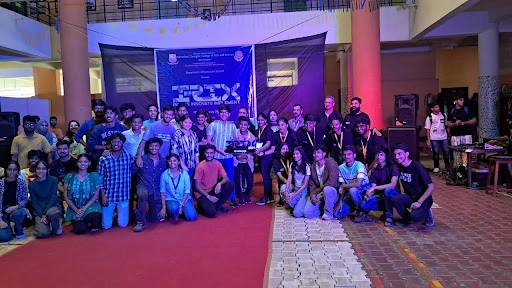
I-RIX 2025 To bring together brilliant minds from across the different colleges, challenging them to innovate, compete, and inspire. Department of Computer Science organized two days Intercollegiate tech fest I-RIX 2025 on 17th and 18th January 2025. Event was inaugurated by Mr. Ricky Noronha, founder of OPSPL. Mrs. G.V.K. Nagalakshmi , Jr. Programmer of the department was the guest of honor. Seven colleges from Goa with more than 100 participants participated in 19 thrilling events. There were various competitions such as Coding, Debugging ,Debate, Quiz etc. This two-day tech fest brought together brilliant minds from across the different colleges, challenging them to innovate, compete, and inspire. Goa Engineering college and Goa University were the winners and the runners-up respectively. I-RIX 2025 has been a celebration of innovation, collaboration, and learning. As we conclude this year’s edition, let us carry forward the lessons and experiences gained, striving for excellence in all our endeavors.

Firebits Installation Ceremony

The installation ceremony of the newly elected Firebits Council members for the academic year 2025-26, took place in the lower auditorium. The Head of the Department gave the opening speech at the inauguration followed by introduction to the club and its activities by faculty club incharge, the club insights by the out-going Firebits members and the badging of the newly elected members, taking of the Oath and the president’s speech. Finally, a vote of thanks, followed by a bonding session with fy, sy and ty’s.

E-Waste Collection Drive

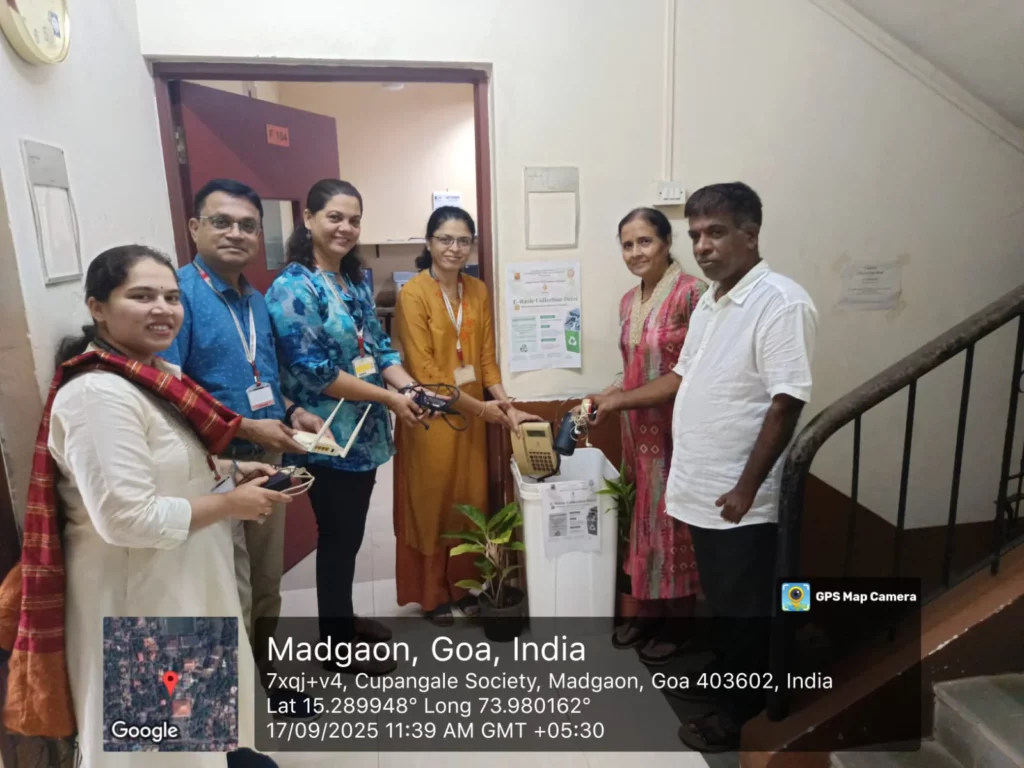
The Department of Computer Science organised an E-Waste Collection Drive under SDG 12 – Responsible Consumption and Production to encourage proper disposal and recycling of electronic waste. The initiative aimed to raise awareness among students and faculty about the environmental impact of e-waste and the importance of sustainable waste management. During the drive, faculty, staff, and students were encouraged to deposit discarded electrical and electronic equipment such as old computers, monitors, printers, keyboards, mobile phones, chargers, and other related devices at the designated collection point in the Computer Science Department. The drive successfully collected several obsolete devices that will be handed over to authorised recyclers. Objective: Participants learned about the harmful effects of improper e-waste disposal and the importance of environmentally responsible recycling practices. The event fostered environmental consciousness and encouraged sustainable waste management within the campus. The initiative received positive feedback from both students and faculty. It was appreciated for promoting environmental responsibility and contributing toward the college’s sustainability efforts.

Talk on Networking

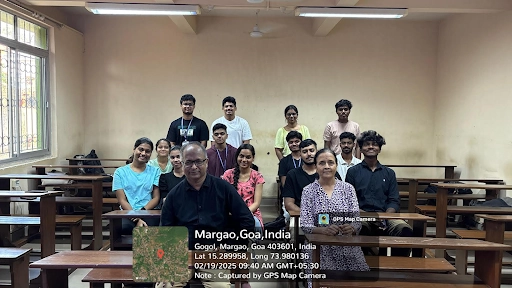
Objective: To Enhancing Industry-Academia Collaboration On 1st march , a talk on “Networking” was organized by Firebits Club of The Department of Computer Science and for the Students of TY BSc Computer Science and PGDCA. The session aimed to bridge the gap between academic concepts and real-world industry practices in the domain of computer networking. Dr Shaila Ghanti welcomed the participants and Resource person. Introduced the Resource person. Mr Mithun Kanji covered the various devices and configuration of Network and Internet. Highlighted the need of the industry. As part of their Computer Networking course, students gained valuable insights from Mr. Mithun Kanji’s expertise, bridging the gap between academic knowledge and industry practices. The vote of thanks was given by Ms Vitali . The coordinator of this event was Ms Sanas Shaikh”

FDP on “Machine Learning: From Theory to Practice”

The objective of organizing the Faculty Development Program (FDP) on “Machine Learning: From Theory to Practice” was to strengthen both the theoretical understanding and practical skills of our faculty members in the field of Machine Learning.Dr. Shaila Ghanti, Head of the Computer Science Department, welcomed the faculty and the resource persons. Ms. Sanas Shaikh introduced the resource persons to the participants. Dr. Harikrishnan emphasized the growing importance of Machine Learning, explaining its evolution and laying the groundwork with an overview of linear algebra concepts crucial for Machine Learning. Hands-on sessions were conducted on algorithms such as Linear Regression, K-Nearest Neighbors (KNN), and Decision Trees, allowing participants to apply these techniques.Dr. Gargi led a session focused on the use of Machine Learning algorithms in research, highlighting their application in energy conservation. She demonstrated how Machine Learning techniques can be used to predict power consumption of CUDA kernels.

Industrial Visit

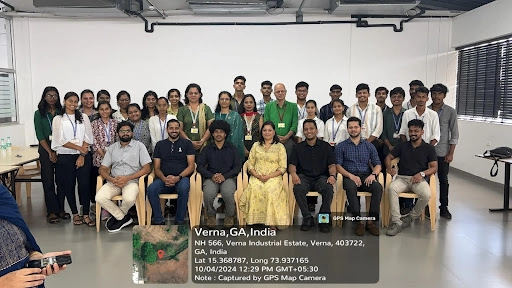
Title of the Event: Connecting Theory to Practice: An Alumni Facilitated Industrial Visit The Students of Computer Science went to Creative Capsule for an interactive session on AI, Business Intelligence and Machine Learning. The expertise in these fields shared their knowledge with the students and the faculties that attended. Everyone got to look around their office and also got their doubts cleared on the future about these topics.  

Geek Hunt 3.0

MCQ Quiz and Coding on C Programming Students were engaging and got to test their knowledge about C programming

Department of Computer Science

FACULTY OF PHYSICAL SCIENCE AND EARTH SCIENCE Department of Computer Science Established in 1986, the Department of Computer Science has grown into a dynamic hub of technological education and innovation, offering industry-relevant programmes and fostering skilled professionals for the IT sector. Overview The Department of Computer Science was established in 1986. With the initiatives taken by the former Principal V.R. Shirgurkar, Late Prof. C.D. Pradhan and Late Prof. U.A. Katre, the Post Graduate Diploma in Computer Applications (PGDCA) was offered to the students and herein started the growth journey of the department.The department has played a major role in contributing to the academic community and society at large.Subsequently, recognizing the need for skilled computer professionals, the B.Sc. program in Computer Science was introduced in the year 1991 and M.Sc. IT (Information Technology) was started in the year 2003. Both these programs are affiliated to the Goa University. Department of Computer Science started BVoc program in Software Development in the year 2017.To augment the knowledge base of the students, the department conducts various certificate courses, seminars, workshops, internship programme and other need based courses from time to time. The department organizes Inter-Collegiate Technical Competitions IRIX and other IT related events in which students from other colleges of the state take part.A large number of students have passed out from this department over the last 39 years and have been absorbed by the industrial and business houses.The department uses modern teaching and learning aids for the teaching learning process. The department is well equipped with up to date hardware and software laboratories. All the above facilities are supported by a centralized uninterrupted power supply. Vision To contribute globally through excellence in computer education and research and to serve as a valuable resource for industry and society. Mission The B.Sc. Computer Science programme is designed to equip students with strong theoretical foundations and practical skills in core areas of computing by providing a strong foundation in programming, database management systems, operating systems, computer networking, software engineering, and emerging digital technologies. read more The department is committed to fostering analytical thinking, problem-solving abilities, and technical competence through a balanced blend of theory, practical exposure, and industry-aligned learning. The department emphasizes learning through hands-on laboratory work, live projects and internships. By integrating workshops, expert lectures and industry collaboration, the department aims to bridge the gap between academic knowledge and professional practice. The department strives to nurture ethical values, innovation, and lifelong learning. The program prepares graduates to excel in software development industries, pursue entrepreneurial ventures, and advance towards higher education and academic careers, thereby contributing effectively to societal and technological advancement. The department is committed to fostering analytical thinking, problem-solving abilities, and technical competence through a balanced blend of theory, practical exposure, and industry-aligned learning. The department emphasizes learning through hands-on laboratory work, live projects and internships. By integrating workshops, expert lectures and industry collaboration, the department aims to bridge the gap between academic knowledge and professional practice. The department strives to nurture ethical values, innovation, and lifelong learning. The program prepares graduates to excel in software development industries, pursue entrepreneurial ventures, and advance towards higher education and academic careers, thereby contributing effectively to societal and technological advancement. Programmes Offered Master of Science (M.Sc) in Information Technology POSTGRADUATE PROGRAM | 2 YEARS Master of Science (M.Sc) in Information Technology Master of Science… Read More Bachelor of Science (B.Sc) in Computer Science UNDERGRADUATE PROGRAM | 3 YEARS Bachelor of Science (B.Sc) in Computer Science The department offers… Read More Bachelor of Vocation (B.Voc) in Software Development UNDERGRADUATE PROGRAM | 3 YEARS Bachelor of Vocational (B.Voc) BVoc in Software Development is… Read More Post Graduate Diploma In Computer Application POSTGRADUATE PROGRAM | 1 YEAR Post Graduate Diploma In Computer Application The course aims to… Read More No posts found Department Faculty The Faculty of Computer Science consists of well-qualified and highly experienced teachers. It adopts diverse and innovative teaching–learning methods to enhance student understanding.The faculty focuses on developing strong conceptual knowledge and practical skills. BSc Computer Science Dr. Shaila R. Ghanti Associate Professor Aquino Barreto Alberto Ian Associate Professor Kumaresh V Chitrampillai Associate Professor Prabakaran V D Associate Professor Suchitra Rajesh Bhat Associate Professor Prof. Sameena Sofia Fernandes E Falleiro Professor Ashweta Milind Shivolkar Assistant Professor Dikshita Vishram Aroskar Assistant Professor Shaikh Sanas A Assistant Professor No posts found BVoc Software Development Mitendra Datta Alve Assistant Professor (Contract Basis) Akshay Bandodkar Assistant Professor (Contract Basis) Sumya Bi Sayed Assistant Professor (Lecture Basis) Orenda Acacia Gonsalves Assistant Professor (Lecture Basis) Virendra Parodkar Assistant Professor (Lecture Basis) No posts found MSc Information Technology Gajanan Nial Assistant Professor Mahesh Pandurang Matha Associate Professor Vidya L. Nadagaddi, Assistant Professor No posts found Activities Organised Irix Firebits Installation Ceremony E-Waste Collection Drive Talk on Networking Internship Orientation FDP on “Machine Learning: From Theory to Practice” Industrial Visit Geek Hunt 3.0 Teaching & Learning method Traditional Lecture Method, Project based learning, Laboratory based Group Discussion Interactive Lecture Method, Problem Solving, Student Presentation , Experiential Learning , Case Studies , and Workshops, Best Practices: Project based learning: Application Development is adopted as a key assessment strategy in the Department of Computer Science to promote experiential and outcome-based learning. Students apply theoretical concepts to design, develop, and demonstrate real-world software applications, enhancing problem-solving and technical skills. This practice encourages creativity, teamwork, and industry readiness. Continuous evaluation at different stages ensures better understanding, accountability, and skill attainment. Promoting Environmental Awareness Via the Department Firebits Club: The objective of promoting environmental awareness and sustainable practices aligns with the club’s mission to engage with the community and address pressing environmental concerns. Through various activities and initiatives, the department club seeks to educate community members about environmental issues and empower them to take meaningful actions towards sustainability.By organizing tree-plantation and e-waste drives the club not only contribute to environmental conservation efforts but also serve as opportunities for fellow students and faculty members to actively participate and make a tangible difference in their surroundings. Alumni Mr Ivo Costa, 2001-2002

Scroll to Top