Bachelor of Arts (B.A) in Psychology
The Undergraduate Programme in Psychology is a multidisciplinary, future-oriented programme designed in alignment with the National Education Policy (NEP) 2020, and implemented from the Academic Year 2023–2024.
Overview
- Program Specific Outcomes (PSO)
PSO-1: Application of knowledge of psychology to real world problems
PSO-2: Demonstration of critical thinking through inquiry
PSO-3: Application of psychology for personal growth/ self-improvement
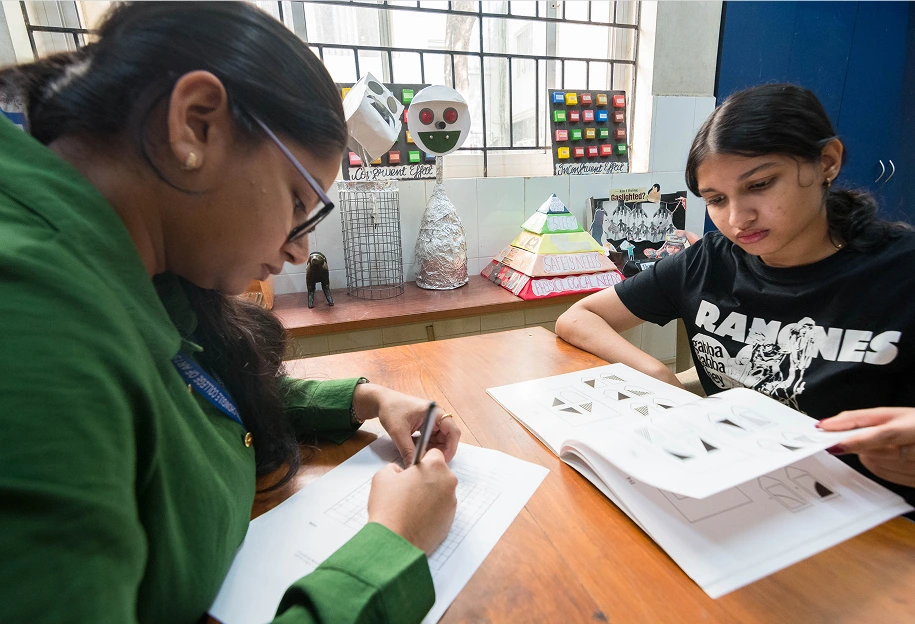
PSO-4: Assist in testing and Experimentation
Course Structure
Internship of 4 credits should be completed in Semester IV and V.
| Major Core | Minor/ Vocational | Multidisciplinary Course (MDC) | Value Added Course (VAC) | Ability Enhancement Course (AEC) | Skill Enhancement Course (SEC) |
|---|---|---|---|---|---|
|
UG-PSY-101: Basic Course in Psychology I |
|
UG-PSY- MDC1: Interpersonal Relationships |
UG-PSY- VAC1: Environmental Psychology
|
|
UG-PSY- SEC1: Self-Regulation |
| Major Core | Minor/ Vocational | Multidisciplinary Course (MDC) | Value Added Course (VAC) | Ability Enhancement Course (AEC) | Skill Enhancement Course (SEC) |
|---|---|---|---|---|---|
|
UG-PSY-102: Basic Course in Psychology II |
|
|
UG-PSY- VAC3: Positive Psychology |
|
UG-PSY- SEC2: |
| Major Core | Minor/ Vocational | Multidisciplinary Course (MDC) | Value Added Course (VAC) | Ability Enhancement Course (AEC) | Skill Enhancement Course (SEC) |
|---|---|---|---|---|---|
|
UG-PSY-201: Psychopathology I UG-PSY-202: Personality Theories |
|
UG-PSY- MDC2: Communication and Conflict Management in Groups and Teams |
|
|
UG-PSY- SEC3: Communication and Interpersonal Skills |
| Major Core | Minor/ Vocational |
|---|---|
|
UG-PSY-203: Psychopathology II UG-PSY-204: Child Psychology UG-PSY-205: Social Psychology UG-PSY-206: Cognitive Psychology
|
UG-PSY- VOC1: Fundamentals of Counselling
|
| Major Core | Minor/ Vocational |
|---|---|
|
UG-PSY-301: Experimental Psychology UG-PSY-302: Psychology of Adolescence UG-PSY-303: Neuropsychology
|
UG-PSY- VOC2: Counselling Specialties |
| Major Core | Minor/ Vocational |
|---|---|
|
UG-PSY-304: Psychological Testing UG-PSY-305: Gerontology UG-PSY-306: Organizational Behaviour UG-PSY-307: Criminal Psychology
|
UG-PSY-VOC3: Research Process |
| Major Core | Minor/ Vocational | Multidisciplinary Course (MDC) | Value Added Course (VAC) | Ability Enhancement Course (AEC) | Skill Enhancement Course (SEC) |
|---|---|---|---|---|---|
|
UG-PSY-101: Basic Course in Psychology I |
|
UG-PSY- MDC1: Interpersonal Relationships |
UG-PSY- VAC1: Environmental Psychology
|
|
UG-PSY- SEC1: Self-Regulation |
| Major Core | Minor/ Vocational | Multidisciplinary Course (MDC) | Value Added Course (VAC) | Ability Enhancement Course (AEC) | Skill Enhancement Course (SEC) |
|---|---|---|---|---|---|
|
UG-PSY-102: Basic Course in Psychology II |
|
|
UG-PSY- VAC3: Positive Psychology |
|
UG-PSY- SEC2: |
| Major Core | Minor/ Vocational | Multidisciplinary Course (MDC) | Value Added Course (VAC) | Ability Enhancement Course (AEC) | Skill Enhancement Course (SEC) |
|---|---|---|---|---|---|
|
UG-PSY-201: Psychopathology I UG-PSY-202: Personality Theories |
|
UG-PSY- MDC2: Communication and Conflict Management in Groups and Teams |
|
|
UG-PSY- SEC3: Communication and Interpersonal Skills |
| Major Core | Minor/ Vocational |
|---|---|
|
UG-PSY-203: Psychopathology II UG-PSY-204: Child Psychology UG-PSY-205: Social Psychology UG-PSY-206: Cognitive Psychology
|
UG-PSY- VOC1: Fundamentals of Counselling
|
| Major Core | Minor/ Vocational |
|---|---|
|
UG-PSY-301: Experimental Psychology UG-PSY-302: Psychology of Adolescence UG-PSY-303: Neuropsychology
|
UG-PSY- VOC2: Counselling Specialties |
| Major Core | Minor/ Vocational |
|---|---|
|
UG-PSY-304: Psychological Testing UG-PSY-305: Gerontology UG-PSY-306: Organizational Behaviour UG-PSY-307: Criminal Psychology
|
UG-PSY-VOC3: Research Process |
| Major Core | Minor/ Vocational |
|---|---|
|
UG-PSY-401: Counselling Therapies UG-PSY-402: Research Designs for Psychology UG-PSY-403: Statistics in Psychology UG-PSY-404: Cross cultural Psychology
|
|
| Major Core | Minor/ Vocational |
|---|---|
|
UG-PSY-405: Neurodevelopmental disorders UG-PSY-406: Analyzing Statistical results UG-PSY-407: Research Writing UG-PSY-408: Clinical skills and assessment
|
|
- Faculty of Social Science
Department of Psychology
FAQ’s
What type of institution is Chowgule College?
The Department of English, Parvatibai Chowgule College of Arts and Science(Autonomous), began in 1962 as one of the first and oldest running department.
What type of institution is Chowgule College?
The Department of English, Parvatibai Chowgule College of Arts and Science(Autonomous), began in 1962 as one of the first and oldest running department.
What type of institution is Chowgule College?
The Department of English, Parvatibai Chowgule College of Arts and Science(Autonomous), began in 1962 as one of the first and oldest running department.
What type of institution is Chowgule College?
The Department of English, Parvatibai Chowgule College of Arts and Science(Autonomous), began in 1962 as one of the first and oldest running department.
What type of institution is Chowgule College?
The Department of English, Parvatibai Chowgule College of Arts and Science(Autonomous), began in 1962 as one of the first and oldest running department.
Career Opportunities