- FACULTY OF LIFE SCIENCE
Department of Botany
Established in 1962, the Department of Botany has grown into a distinguished centre for academic excellence and research, recognized for its doctoral programmes and contributions to scientific scholarship in Goa.
Overview
The Department of Botany has been an integral part of Parvatibai Chowgule College since its inception in 1962 at Vidyanagar, Aquem, Margao, and was relocated to its present premises in 1971. Initially, the department introduced Botany at the undergraduate level and soon emerged as a centre of academic excellence. In 1975, it became the only department in the State of Goa to be recognized by the University of Bombay for awarding the Ph.D. degree. Following the establishment of Goa University, the department continued to function as a recognized research centre and has since produced 11 Ph.D. scholars, 1 M.Phil., and 5 M.Sc. degrees by research.
The department has a strong research culture and has successfully completed major and minor research projects funded by esteemed external agencies such as the University Grants Commission (UGC), Council of Scientific and Industrial Research (CSIR), Department of Science and Technology (DST), Department of Science, Technology and Environment (DSTE), Department of Biotechnology (DBT), and Department of Environment (DOE). It has also organized and hosted numerous national and state-level seminars and workshops, contributing significantly to academic and scientific discourse.
Vision
To be a centre of excellence in plant sciences education and research, fostering scientific temper, sustainability awareness, and ethical responsibility, while contributing to environmental conservation and societal development.
Mission
- To impart quality education in Botany through innovative teaching–learning practices aligned with NEP 2020 and contemporary scientific advancements.
- To promote research orientation, critical thinking, and experimental skills among undergraduate students.
- To encourage interdisciplinary learning and field-based exposure for a holistic understanding of plant and environmental sciences.
- To inculcate environmental consciousness, sustainability values, and biodiversity conservation ethics through academic and outreach activities.
- To prepare students for higher education, research, and diverse career opportunities in plant sciences and allied fields.
Activities Organized
The Department of Botany regularly organizes academic, research, extension, and student-oriented activities to enhance experiential learning and scientific awareness.
Major activities include:
Teaching & Learning method
- Interactive Lecture Method: Concepts are delivered through multimedia presentations, models, herbarium specimens, and ICT tools. Question–answer sessions and short discussions are incorporated to ensure conceptual clarity.
- Experiential and Field-Based Learning: Field visits, biodiversity drives, “Plant of the Week,” and herbarium handling allow students to observe, identify, and document plants in natural habitats, linking theory with real-life applications.
- Research-Based Learning: Through Projects, Research Interaction Series (RIS) and Journal Club, students: Present research papers and projects at conferences, Discuss methodology and data interpretation, Learn scientific writing and referencing
- Activity-Based and Participatory Learning: Club Botanica activities, student orientation programmes, and plant drives promote, Community engagement, Leadership, Teamwork, science communication
- Seminar and Presentation Method: Students deliver oral/poster presentations on botanical themes, improving confidence, articulation, and scientific communication skills.
- Problem-Solving and Case Study Method: Case studies related to conservation, biotechnology applications, and plant diseases are discussed to promote analytical thinking.
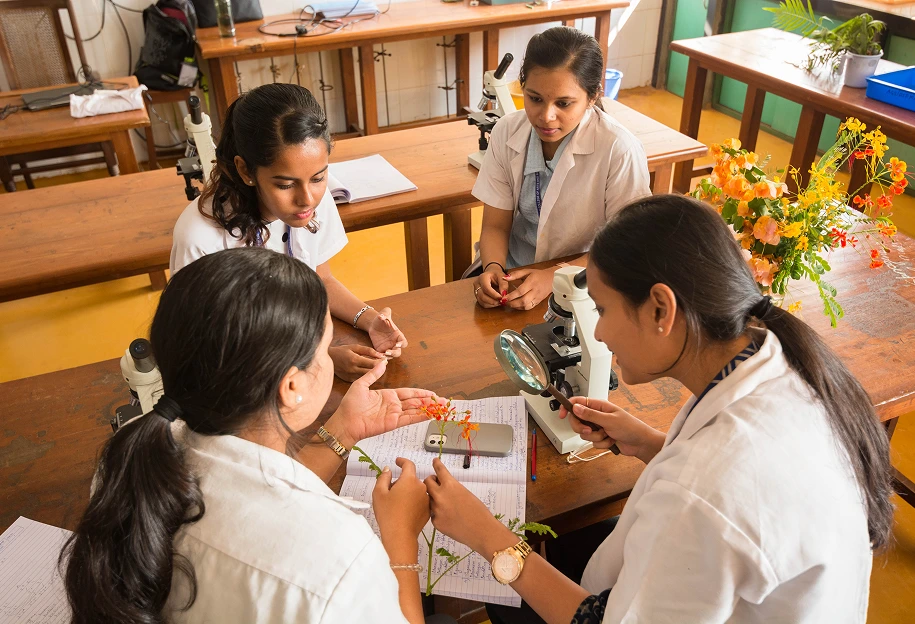
- Demonstration and Practical Method: Hands-on laboratory sessions focus on: preparation of media, microscopic studies, biochemical tests, instrument handling and data recording, Practical manuals and rubrics are used to standardize learning.
Best Practices
The Department of Botany emphasizes experiential learning, research culture, and community-oriented ecological awareness through a range of academic and co-curricular activities. These practices collectively contribute to holistic student development, promotion of biodiversity conservation, and strengthening of institutional social responsibility.
- Student-Centric Orientation and Mentoring: A structured Student Orientation Programme for UG students familiarizes learners with the curriculum, pedagogy, laboratory practices, internships, and departmental opportunities. This practice promotes smooth transition into the academic environment, clarity of expectations, and early engagement in departmental activities. Regular mentoring further supports academic, personal, and career development.
- Promotion of Biodiversity Conservation and Traditional Knowledge: Through Plant Drive Activities and community seed-exchange initiatives, the department encourages conservation of local flora and the revival of traditional ethnobotanical knowledge (Ranbhaji). Students actively participate in the identification, collection, and nurturing of native plant species, thereby cultivating ecological sensitivity and responsibility toward the environment.
- Experiential and Field-Based Learning: Educational field visits to Conferences, botanical gardens, sanctuaries, and arboretums provide hands-on exposure to plant diversity, taxonomy, and conservation practices. This best practice bridges theory and application, enhances observational and recording skills, and instills an understanding of in situ and ex situ conservation strategies.
- Research Culture and Scholarly Engagement: The Research Interaction Series (RIS) and College Journal Club Sessions promote a vibrant research environment by encouraging students to present their research work, discuss methodologies, and critically analyze scientific literature. These activities strengthen scientific temperament, presentation skills, and collaborative learning, preparing students for higher studies and research careers.
- Scientific Communication and Botanical Awareness: The Plant of the Week initiative enhances botanical literacy by highlighting morphological features, ecological importance, ethnobotanical uses, and conservation status of selected plant species. Display boards and digital posts reach both students and faculty, fostering continuous learning beyond the classroom.
- Leadership and Community Building through Student Clubs: Through Club Botanica activities and induction ceremonies, students are encouraged to take leadership roles in academic, environmental, and outreach initiatives. These platforms nurture organizational skills, teamwork, and peer learning while creating a sense of belonging within the department.
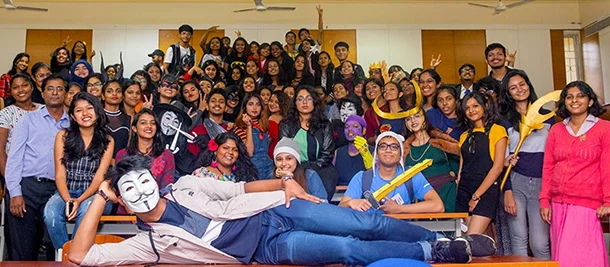
- Celebration of Academic Culture and Human Values: Events such as Teachers’ Day Celebration and Freshers’ Party strengthen student–teacher relationships, respect for educators, and positive departmental culture. These practices cultivate values of gratitude, inclusiveness, and mutual support, essential for holistic personality development.
- Academic Outreach and Professional Development: Faculty members regularly contribute as resource persons in National and State-level programmes, extending departmental expertise beyond the institution. This outreach enhances institutional visibility, promotes knowledge sharing, and builds academic collaborations.
Alumni of the Department:
Sr. No. | Name | Year | Employer Name | Designation |
1. | Prof. Dr. Bernard Rodrigues M.Sc. PhD | 1984 | School of Biological Sciences and Biotechnology (SBSB) at Goa University | Senior Professor of Botany |
Ms. Celly Quadros MPhil. Med | 1987 | Government College of Arts, Science and Commerce, Quepem – Goa | Associate Professor | |
Dr. Annie Gomes M.Sc. PhD | 1993 | Government College of Arts, Science and Commerce, Quepem – Goa | Associate Professor | |
Dr. Ashish Prabhugaonkar M.Sc. PhD | 2003 | Dhempe College Of Arts And Science, Miramar, Panaji, Goa | Assistant Professor | |
Vishal Jamuni M.Sc. SET, CSIR-NET | 2019 | Government College of Arts, Science and Commerce, Quepem – Goa | Assistant Professor | |
Dr. Kiran Eripogu | 2013 | Prof. Wen Hsiung Li, Biodiversity Research Centre, Academia Sinica- Taiwan | Post doctoral Fellow | |
Ms. Siddhi Ramesh Naik | 2022 | Goa University | Assistant Registrar (Contractual) |